Red Light Therapy for Muscle Recovery Works
Share
You feel it the day after a hard lift, a long run, or a weekend that pushed a little past your usual pace - that heavy, dull soreness that makes stairs feel personal. Red light therapy for muscle recovery has moved from pro training rooms into home wellness spaces for exactly this reason. People want recovery tools that fit real life, not another appointment on the calendar.
What makes red light therapy appealing is the balance it offers. It feels low effort, but it speaks to a high-performance goal: getting back to training, work, and daily movement with less friction. For people building a more intentional recovery routine at home, that combination matters.
Why red light therapy for muscle recovery gets attention
Red light therapy uses specific wavelengths of light, typically in the red and near-infrared range, to interact with tissue below the skin. The basic idea is simple: light energy may support cellular function, which can help the body manage stress from exercise and repair more efficiently.
That sounds technical, but the practical appeal is easier to understand. After training, your muscles are dealing with microdamage, inflammation, and energy demand. Recovery is not just about waiting. It is about giving the body the right conditions to repair tissue, restore performance, and reduce unnecessary soreness.
This is where red light therapy enters the conversation. Research suggests it may help reduce delayed onset muscle soreness, support circulation, and improve the cellular processes tied to recovery. It is not a magic shortcut, and it does not replace sleep, protein, hydration, or smart programming. But it can be a useful layer in a recovery system that is already built well.
What it may actually help with
The strongest interest around red light therapy is usually tied to soreness, inflammation, and muscle fatigue. If you train consistently, those are the issues that determine how quickly you feel ready for the next session.
Some people use red light therapy before training in hopes of priming tissue and supporting performance. Others prefer it after workouts to help calm soreness and encourage recovery. Both approaches have some support, and the better choice often depends on your routine, training intensity, and how your body responds.
The realistic expectation is not that one session will erase muscle fatigue. The better expectation is that regular use may help you feel less beat up over time. For busy adults managing strength training, recreational sport, long workdays, and family schedules, even a modest reduction in soreness can make consistency easier.
There is also the comfort factor. Unlike more demanding recovery methods, red light therapy is passive. You stand in front of a panel or use a targeted device for a short session, and that is the ritual. For many people, the ease of use is what makes it sustainable.
How red light therapy works in the body
The conversation usually centers on mitochondria, the part of the cell responsible for energy production. Certain wavelengths of light are thought to support mitochondrial activity, which may improve how cells produce and use energy. In recovery terms, that can matter because tissue repair is energy-intensive.
There is also interest in how red and near-infrared light may influence blood flow and inflammatory signaling. Better circulation can support delivery of oxygen and nutrients to recovering tissue. A healthier inflammatory response matters too, because inflammation is part of recovery, but too much of it can leave you feeling slow, sore, and stiff longer than necessary.
That nuance is worth keeping. Inflammation is not the enemy in every case. Your body needs it to heal. The goal is not to shut recovery down. The goal is to support a more efficient recovery process.
Choosing the right setup for at-home use
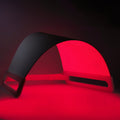
If you are considering red light therapy for muscle recovery at home, the device format matters. Small handheld tools can work well for targeted areas like calves, elbows, shoulders, or knees. Larger panels make more sense if you want to cover bigger muscle groups such as quads, hamstrings, glutes, back, or chest.
Coverage changes the experience. A compact device may be enough if your soreness is very specific. But if your training is full-body, a larger panel tends to feel more practical and more aligned with routine use. The easier it is to use consistently, the more likely it becomes part of your weekly rhythm.
Power and wavelength matter too, but this is where people often get overwhelmed. You do not need to obsess over every specification to make a smart choice. What matters most is buying a quality device designed for therapeutic use, with credible output and enough coverage for how you actually plan to use it. Professional-grade equipment tends to justify itself through a better experience, more efficient sessions, and greater confidence in what you are bringing into your home.
What a smart routine looks like
The best recovery tools are the ones you will actually use. That usually means short, repeatable sessions built around moments that already exist in your schedule. After a workout, before a shower, or in the evening as part of a wind-down routine are often the easiest times to stay consistent.
Most people do not need marathon sessions. In fact, more is not always better. Light therapy tends to work best when the dose is appropriate rather than excessive. Depending on the device and treatment area, sessions are often relatively short and repeated several times per week.
Consistency matters more than intensity. A premium recovery routine is not about doing everything. It is about choosing a few tools that fit naturally into your life and using them often enough to notice the difference.
Where red light therapy fits with other recovery methods
Red light therapy works best as part of a broader system. If your sleep is poor, your training load is erratic, and your nutrition is an afterthought, no device is going to fully compensate for that. But when the foundation is solid, it can become a meaningful edge.
It pairs especially well with other at-home recovery practices. Compression can help when your legs feel heavy. Cold exposure may be useful at certain times, though timing matters depending on your training goals. Massage tools can ease local tension. Red light therapy sits in that mix as a calm, low-friction modality that supports restoration without asking much from you.
That is part of its luxury. Not extravagance for its own sake, but convenience with purpose. A home setup removes the usual barriers: no driving, no booking, no squeezing recovery into someone else’s schedule. You get access to a serious modality in the flow of your own day.
Who may benefit most
This approach tends to appeal to people who train enough to feel recovery bottlenecks but do not want a complicated protocol. Strength-focused adults, runners, cyclists, golfers, active professionals, and wellness-minded homeowners often fit that profile. They want less soreness, more continuity, and a recovery ritual that feels refined rather than clinical.
It may be especially useful if you deal with recurring tightness in the same regions, train multiple days per week, or simply want a more complete home wellness setup. For these users, red light therapy is not just about one hard workout. It is about keeping the body feeling more supported across months and years of movement.
Sanora Wellness speaks to that shift well: bringing professional-grade recovery into the home in a way that feels elevated, credible, and easy to keep using.
The trade-offs to know before you buy
Red light therapy is promising, but it is not instant and it is not universal. Some people notice changes quickly, especially around soreness and general muscle comfort. Others need several weeks of consistent use before they feel a clear difference.
There is also a quality gap in the market. Devices vary widely in power, coverage, build quality, and treatment efficiency. A cheap device that is inconvenient or underpowered often becomes decor. A better device usually costs more, but it is more likely to deliver an experience that supports long-term use.
It also helps to keep claims in perspective. Red light therapy may support recovery. It does not replace medical care for injury, and it is not a substitute for training intelligently. Think of it as a recovery amplifier, not a rescue plan.
For people who want their home wellness space to do more than look good, that distinction matters. The right tools should feel good to use, yes, but they should also earn their place through results, routine, and staying power.
If your goal is to recover with more consistency and less effort, red light therapy is worth considering not as a trend, but as a quiet upgrade to how you take care of your body every day.